
Every January feels like a fresh start. We commit to healthier eating habits. We stock our grocery carts with produce, clear junk food from our pantry, and map out the perfect sustainable weight loss meal plan.
By February, our carefully laid New Year’s Resolutions have unraveled. But, that does not equal failure. Instead, it’s the plans that have failed. Many people don’t build New Year’s eating plans in a way that works with human physiology or behavior. Instead, they rely on willpower.
The good news is that you can maintain healthy eating all year long with just a few key shifts. Let’s take a closer look at what makes this possible.
Why Most New Year’s Eating Plans Backfire
Many January health plans collapse not because people lack discipline, but because the plans themselves are built in ways that don’t align with human psychology, physiology, or real life. Extreme rules, unrealistic expectations, and constant decision-making create pressure that most people simply can’t sustain. When a plan feels rigid or exhausting, it becomes harder to follow over time. Understanding these patterns makes it easier to build an approach that actually lasts.
1. They Are Too Rigid
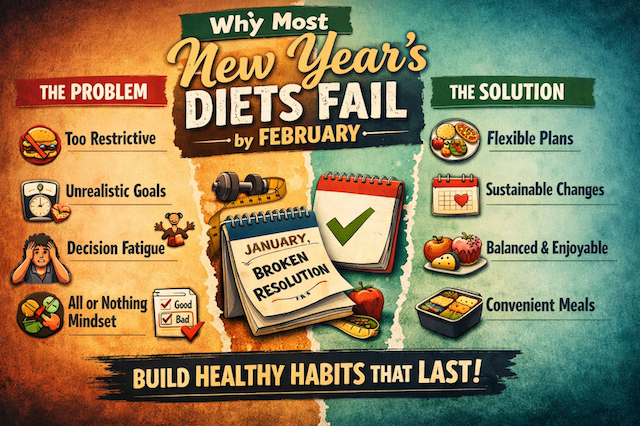
One of the biggest reasons New Year’s health goals fail is because they are based on “All or Nothing” principles. They rely on extreme rules, such as:
- Cutting out entire food groups
- Following rigid meal schedules
- Relying on willpower alone for behavior change
- Labeling foods as “good” or “bad” often backfires.
Research consistently shows that restrictive diets increase the risk of binge eating, burnout, and weight gain. When a plan feels unsustainable, it usually is.
Studies have shown that dietary restriction is associated with increased cravings. It actually causes overeating. The stricter the rules, the harder it is to maintain the diet. Healthy eating works best when it is realistic and flexible, not restrictive and punishing.
2. They Are Based on Unrealistic Expectations
We live in a culture where we are taught to expect “instant results.” So, many people expect change to happen fast. When an overnight transformation doesn’t happen, a person may quickly become unmotivated. But, expecting rapid change is likely to lead to failure. Physiological changes, especially metabolic changes, take time.
In addition, habit formation is also a gradual process. According to Scientific American, it’s a myth that it takes just 21 days to form a habit. In studies, the average amount of time it takes to form a habit is roughly 3 times that, or 66 days. That’s 66 days of consistent work. For some people, it took just over 250 days. Sustainable progress is slow. However, it is far more likely to last.
3. They Require Too Much Planning
Another frequently overlooked reason healthy eating plans fail is because of the work that goes into them. Many of the healthy meal plans that you find online are over-optimized.
Trying to figure out the calories, macros, and food groups for 21 meals is a huge cognitive load. Meal planning can easily become a second job. And this is just the planning; it doesn’t include cooking and cleanup.
All of this is mentally exhausting, so people tend to just give up and opt for convenience instead.
Structured but flexible systems tend to work better. Reducing daily decisions around food makes consistency far easier. Services like LocalFoodz meal delivery help remove the planning and work of eating healthy. This makes sticking with a healthy diet so much simpler.
4. They Focus on Extreme Clean Eating
Clean eating refers to an approach that focuses on whole, unprocessed foods. On social media, you may see fresh, real ingredients showcased in photos and videos. The problem is that meal plans built around this approach tend to focus on very strict rules. Trying to follow them can increase food anxiety and feelings of guilt.
Psychological studies have shown that adhering to inflexible food rules, such as only eating “clean” food, is more likely to cause binge eating. The healthier approach? Your eating habits should support your life, not dominate it.
What a Sustainable Weight Loss Meal Plan Actually Looks Like
Most New Year’s resolutions fail by February because they’re built on unrealistic expectations. The approaches that actually work don’t require hours of careful meal prep. Instead, they are flexible, balanced, and prioritize nutritional balance over social media trends. If you want to make a change that lasts beyond February, focus on these five principles.
1. Structured, But Not Rigid
The most effective meal plans that work long-term aren’t the most trendy. They are built on solid nutritional science and designed to fit into your actual life. They give you a clear framework to follow. However, they shouldn’t make eating healthy feel like a punishment. You aren’t locked into eating the same thing every day. These meal plans have room for your preferences.
This is where pre-built meal plans organized by specific goals, such as low-carb, become especially helpful. Whether you’re focused on muscle building, weight management, or balanced nutrition, you get meals that are designed for your specific goal while still having different options to choose from.
2. Involves Fewer Decisions
The average person makes over 200 food-related decisions every day. Decision fatigue refers to the mental exhaustion that occurs from making too many decisions. We have all felt it. The problem is that it leads to poorer decision-making.
When meal plans are very complicated and require a ton of effort, people are much more likely to abandon them and choose quick (and unhealthy) takeout instead.
A 2025 article published in Nutrients points out that frequent food decisions throughout the day likely contribute to decision fatigue, which then leads to more impulsive and less health-conscious eating. The review suggests that having healthy options ready to go, may be one of the best ways to counteract this effect.
3. Makes Room for Real Life (and Dessert)
People who maintain healthy habits long-term focus on consistency over perfection. Enjoying dessert or missing a meal prep day does not mean that the plan is ruined. However, many people have the mindset that if you mess up your meal plan, then the whole plan is ruined. This mindset causes them to quit entirely.
A sustainable approach makes room for mistakes (and dessert). People who take this approach go ahead and satisfy those sweet cravings with keto scone bites now and then. Enjoying something sweet doesn’t mean that you have to abandon your plan. It is part of the plan.
4. Fits Into Your Routine
When it comes to behavior change, routine is critical. It reduces cognitive load and automates actions. Having predictable meal options, eating at regular times, and reducing choices around food all support consistency.
When you have a routine, healthy eating becomes automatic. Healthy routines don’t have to be rigid. They simply need to be something you can repeat daily.
5. Focuses on Balanced Meals Over Diet Trends
One reason January plans fail is that they follow social media trends rather than scientific evidence. Those viral TikTok trends may seem appealing, but they rarely are based on science, which makes them unlikely to be effective. Furthermore, many could be harmful. According to research conducted by MyFitnessPal, only 2 percent of the nutritional advice found on the platform is accurate compared to the actual nutritional guidelines from health officials.
Instead of relying on guidance from social media influencers who may not be qualified to provide nutrition advice, choose an approach that is based on science. Look for one that emphasizes balance over extremes, which is how LocalFoodz meals are designed.
Building a Sustainable, Healthy Eating Plan
If your goal is to maintain a healthy lifestyle beyond January, as part of a sustainable weight loss program, focus on these things:
- Aim for consistency, not perfection: Missing a day doesn’t mean that you cannot restart.
- Allow flexibility without guilt: Choose customized meals that allow you to select what you want to eat, including snacks and desserts.
- Reduce decision fatigue wherever possible: Choose healthy, fresh meals that are already nutritionally balanced.
- Choose sustainability over speed: When it comes to adopting a healthier diet, slower progress wins.
- Focus on balance, not restriction: Your body needs a mix of macronutrients to function. Eliminating what might be considered to be “unhealthy” food groups might seem like a quick way to lose weight. However, healthy fatsand carbohydrates are extremely important. Eliminating or restricting these can affect hormone regulation and more.
- Don’t fear convenience: Healthy eating does not require hours of meal prep. This is nothing more than a myth. Convenient meals from LocalFoodz offer flexible, nutritionally balanced options without the fuss.
- Take the stress out of healthy eating: Pay attention to how your eating plan makes you feel emotionally. If you feel bad about yourself because of food choices, it’s working against you. Healthy eating should feel supportive, not stressful.
Final Thoughts: The Real Reason Healthy Eating Resolutions Often Fail
Most New Year’s weight loss meal plans fail, not because of willpower, but because they focus on completely overhauling your diet, or expect too much, too quickly. Healthy eating that is realistic and satisfying stops being a January resolution and becomes a habit.
Sustainable weight loss meal plans that work fit into your daily routine. They feel enjoyable instead of being overly restrictive. They are also flexible, balanced, and yet structured at the same time.