
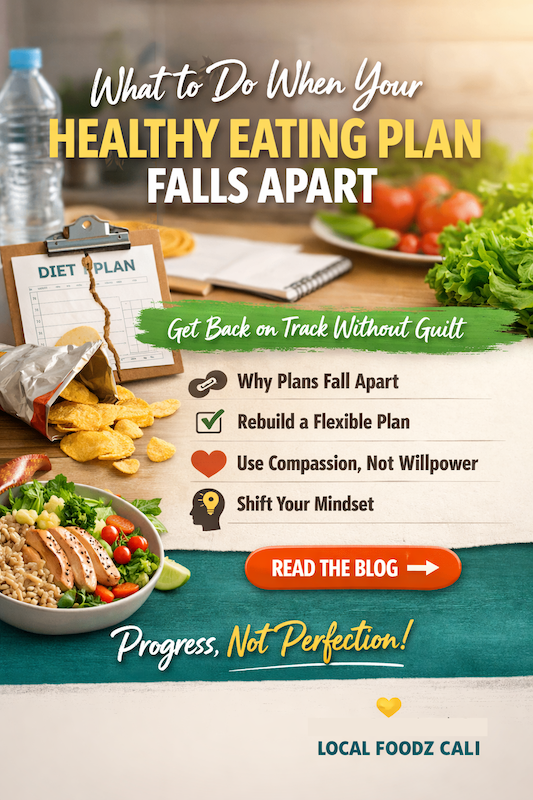
How to get back on track without guilt.
Every January, about 30 percent of Americans set New Year’s resolutions. They create ambitious meal plans and stock the refrigerator with fruits and vegetables. By February, most of these healthy eating plans fail.
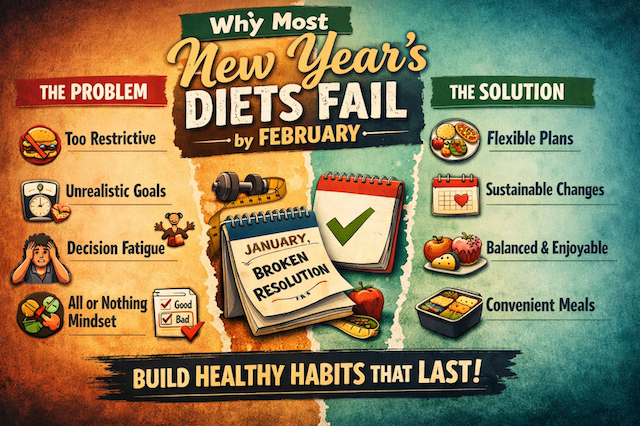
If you read my previous article, Why Most New Year’s Healthy Eating Plans Fail by February, then you know that this isn’t a lack of motivation or a personal failure. Rather, it is due to unrealistic expectations and rigid rules.
So, how do you get back on track? What do you do when your healthy eating plans unravel? It’s normal to feel discouraged or frustrated, but don’t give up!
In this article, we’ll help you get back on track.
Step 1: Identify Why the Plan Fell Apart
As stated in the article mentioned above, there are multiple reasons why a New Year’s plan might fall apart, such as setting unrealistic goals or focusing on extremes. Identify the reason why your plan fell apart. What aspect of it didn’t match your real life? This will help you identify how to fix it.
The most common reasons include:
- There’s a lack of support: You don’t have the support you need.
- It’s not something you truly desire: The goal is driven by external pressure from others (or social media).
- It’s too much: You are focused on huge, sweeping changes.
- Life got in the way: Sometimes it’s simply that you are too stressed or have too much going on right now.
- You expected perfection: Your plan didn’t include room for social events, cravings, and other real-life things.
Step 2: Rebuild A Flexible Plan
Many people deal with a setback by making their plan more rigid. They may add more restrictions, cut more foods, or tell themselves that they need to have better discipline so that they stay on track with counting macros, for instance. However, this usually makes things worse. It causes guilt and shame, which do not promote sustainable lifestyle changes.
What you want todo instead is to rebuild the plan in a way that is flexible and fits your life.
You don’t have to completely overhaul your entire plan. You just need to make some changes and adjustments. Keep what has been working. Adjust the rest so that it gets you moving in the direction you want to go. It doesn’t have to be perfect. It just has to be doable.
A successful eating plan isn’t perfect; rather, it:
- Fits your real life
- Adjusts as needed
- Allows for cravings
- Supports your energy levels
- Isn’t sustained on willpower alone
- Helps you feel nourished, not restricted
Focus on the small changes. For example, add more balanced snacks to your plan. Choose healthier alternatives to takeout. Add more water to your eating plan. Here are some other tips.
Create Options That Match Your Energy
When energy is low: Think about what you will want to eat when you are tired. A great example are they ready-to-eat LocalFoodz meal plans. These are custom-made based on your nutritional goals. Want to do Low Carb or Plant Basedbut don’t have the energy to find recipes or shop? These meal plans are perfect.
When you have more energy: Customize your meals. Create specific meals that meet your goals.
Both of these options count as success.
Build in “Treats”
When it comes to diets, restriction backfires. It causes binge eating. That is because the brain interprets restriction as deprivation. This causes intrusive thoughts about food. Allowing yourself a treat tells your brain that food is not scarce. There is no need to panic and overeat.
When treats are planned and intentional, it supports long-term healthy eating.
You are not sabotaging your healthy meal plan by having a treat here or there.
Choose treats that have both protein and healthy fat. An example would be a Keto Snack Pack that has raw almonds, mild cheddar, and hard-boiled eggs.
Plan for Social Events
Many people’s healthy eating plans fall apart after social events. That’s because people often build New Year’s resolutions on the idea that everything will be perfect. They don’t consider real-life things like date nights, birthday dinners, or last-minute social gatherings.
It can be really easy to steer away from your healthy eating plan at a party. Afterwards, many people feel guilty and as though they have “messed up.”
That triggers perceived failure and thoughts like “I already blew it.”
So, when re-doing your healthy eating plan, come up with some strategies ahead of time to help you stick with your healthy meal plan, for example:
- Bring along a small protein snack. This will help keep your blood sugar steady and reduce cravings. A good example is the Balanced Snack Pack.
- Make a plan ahead of time. For instance, “I will have one drink at the event” or “I will load my plate with mostly (75%) veggies and fruits.
Step 3: Replace Self-Blame With Compassion
You have rebuilt your healthy plan. However, things are starting to fall apart. You’ve had a stressful week. So, you ignore the healthy meals you prepped and instead order DoorDash for the takeout you were craving.
When this happens, the instinct is to overcorrect by restructuring meals. However, self-blame only keeps you stuck. Instead, take a moment and shift from self-blame to problem-solving mode.
Ask yourself:
- What led to this decision?
- Did I skip meals today?
- Was I stressed, overwhelmed, or tired?
- Was I craving comfort, rather than food?
These questions will help you better understand. And understanding is what allows you to move forward with success.
Step 4: Reframe Your Thoughts
This is a very important step. It’s based on psychology, and most people don’t do it. But it can make a huge difference. When you have a setback, try reframing your thoughts about it. Try, instead of:
- “I blew it,” try “I hit a bump.”
- “I have no willpower,” try “I was stressed or “I was tired.”
- “I have to start all over,” try “I’m starting from where I left off.”
- “I just ruined everything,” try “This is a normal part of the process.”
Step 5: Look at the Bigger Picture
One month doesn’t define your eating habits. What matters is the pattern over time.
Ask yourself:
- What choices are the easiest to make?
- What does my eating look like over months?
- What habits am I building over the long term?
- What direction am I moving overall?
Focusing on the bigger picture helps you see progress you might otherwise miss.
Step 6: Strengthen Your Environment
When they have a setback, most people assume it’s because of a lack of willpower. But that is often not the case at all. One thing that many people overlook is the environment. Your environment should support your goals, not derail them.
If you keep Doritos right on the counter where you can see them every time you go to the kitchen, you are likely to snack on them.
Try making these adjustments:
- Keep fruits and vegetables visible.
- Keep healthy desserts at home.
- Keep balanced, ready-to-eat meals on hand.
- Stock ready-to-eat proteins like rotisserie chicken or hard-boiled eggs.
- Cut veggies and fruits up so they are ready to eat, or use pre-chopped versions.
Step 7: Address the Emotional Side of Eating
Many people turn to food for emotional relief, comfort, and out of routine. Psychological factors shape our eating patterns. Ever hear people talking about eating a whole gallon of ice cream when they are sad? Food is soothing and comforting.
The goal isn’t to eliminate emotional eating. It’s to develop other coping strategies to manage emotions besides food. Instead of reacting immediately when a craving hits, ask yourself what you need right now. Is it comfort or to relieve boredom?
Try adding one or two of these things:
- Get some fresh air
- Journal or listen to some calming music
- Call a supportive friend or family member
- Try a grounding exercise like yoga or meditation
Practicing these things consistently can help you rely less on food to regulate emotions.
Step 8: Ensure Your Plan Evolves With You
Your needs will not stay the same. They change throughout the year. A plan that feels doable in Febuary might not work in the summer when you are spending more time away from home.
From time to time, ask yourself:
- What’s hard about this meal plan?
- What needs to change?
- What’s working about my meal plan right now?
A plan that evolves is a plan that lasts.
One way to keep your eating plan sustainable and flexible is to build in support that fits your current life demands. For example, using LoCalFoodz Cali customized meals lets you choose your carbohydrates, vegetables, proteins, and sauces in combinations and portions that match your goals and lifestyle at the moment. Their menu lets you build meals tailored to your preferences and portion needs.
FInal Thoughts
Remember: When your healthy eating plan falls apart, it’s not a failure. It’s a turning point. Plans fall apart when they are not doable. This is a chance to build something even better and more sustainable.